In the turbulent ocean of the web in 2026, visibility isn’t always bought; it’s earned. As algorithms become increasingly sophisticated, favoring authenticity and relevance, traditional link-gathering techniques are showing their limitations. Link baiting is emerging not just as a tactic, but as a fundamental philosophy for any digital sailor looking to fill their nets with qualified traffic. It’s no longer about harassing other webmasters for a link, but about creating a resource so valuable, captivating, or useful that sharing becomes a natural reflex for the community. It’s a shift from active and sometimes intrusive hunting to a magnetic attraction based on genuine value.
The concept rests on a simple yet demanding premise: quality content is the best bait. Whether through humor, raw utility, controlled controversy, or exclusive data analysis, the goal is to trigger a chain reaction. This approach, while requiring a significant initial investment in creativity and production, offers a sustainable return on investment. It allows you to build solid authority, resistant to the storms of algorithmic updates, and ensures organic SEO growth that lasts well after the initial publication.
- In short, link baiting is a passive link acquisition strategy based on creating high-value content.
- Unlike proactive link building, it aims to obtain natural links, which are trusted by search engines.
- The most effective formats include data studies, free tools, ultimate guides, and interactive visual content.
- Success depends as much on the quality of the bait (the content) as on its deployment (the initial promotion).
It’s a sustainable method that strengthens the overall authority of the domain and the brand’s long-term reputation.
Understanding the mechanics of link baiting in today’s SEO ecosystem
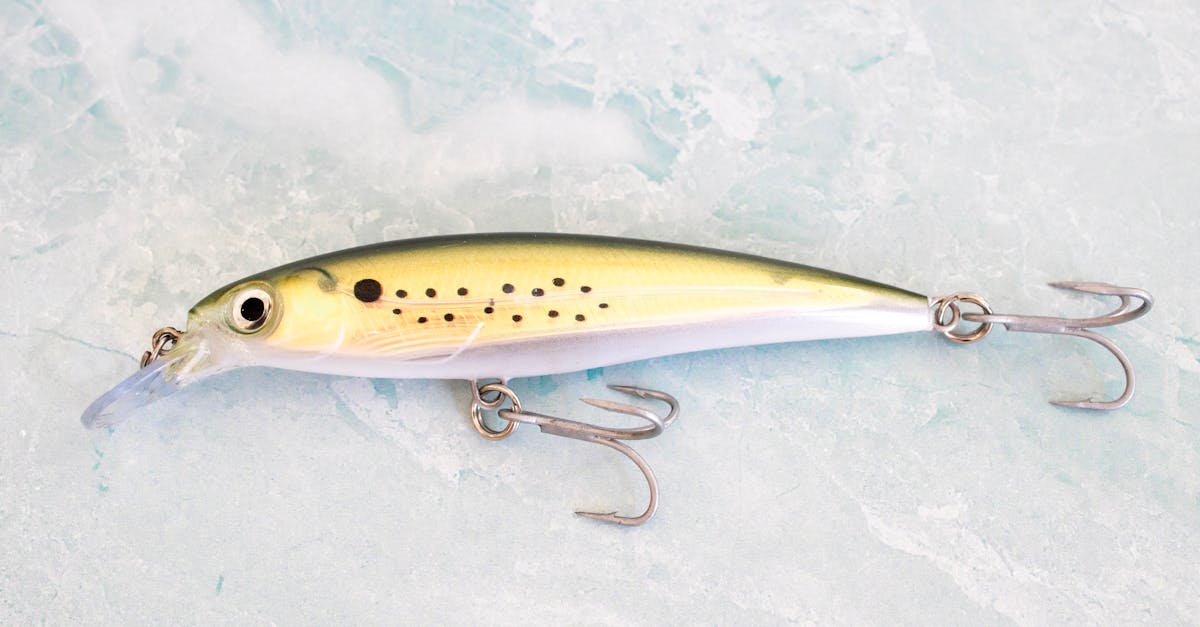
To navigate the waters of modern SEO effectively, it’s essential to understand what fundamentally distinguishes link baiting from other forms of link acquisition. Imagine the difference between spearfishing, catching one fish at a time, and casting a net baited with irresistible bait that attracts entire schools of fish to you. Link baiting is the latter. It’s a reversal of roles: instead of going to the link, you attract the link to you. By 2026, this distinction is crucial because search engines, thanks to artificial intelligence, are becoming increasingly adept at detecting artificial or negotiated links.
The core of this strategy lies in the psychology of sharing. Why does a user or website administrator choose to link to an external page? Rarely to please, but often to enhance one’s own content. By linking to an exceptional resource, it increases the credibility of its own article. Your “bait” content must therefore serve the interests of the person sharing it. It must fill a gap, prove a point, or offer a tool that the referring site couldn’t develop itself. It’s a tacit exchange of value: you provide the excellence, they provide the visibility. It’s also crucial to note that link baiting is not “clickbait.” Clickbait, or “click traps,” relies on a promise that is often broken, a sensationalist title that leads to empty content, generating frustration. Link baiting, on the other hand, must absolutely deliver on its promises. If the bait is attractive but empty, the fish will spit out the hook immediately. To
obtain quality backlinks
Substance must take precedence over form. User satisfaction once on the page is what transforms a simple visitor into an ambassador who will share the link on their own networks or website.
Finally, link baiting operates on a different timescale. A traditional prospecting campaign stops as soon as you cease sending emails. A page designed for link baiting, such as a complex calculator or a benchmark study, continues to attract links for months, even years, after it goes live. It’s a long-term investment for your site. Each new natural link strengthens the foundations of your domain, sending powerful signals of trust to search engines, which interpret these spontaneous votes as irrefutable proof of your subject authority. The Psychology of Sharing: Why We Create Links

Emotion also plays a major role. Admiration, surprise, or even measured indignation can catalyze massive sharing. However, as a professional, you must handle emotion with care. The goal is to generate positive engagement. For example, an inspiring story about an unlikely success in your industry will create a wave of goodwill and links from personal blogs or mainstream media, thus broadening your online visibility beyond your usual niche.
The most effective bait formats for capturing links
Not all content is equal when it comes to viral potential. Some formats are naturally predisposed to generating inbound links because they condense value in a way that is difficult to replicate. One of the kings of formats remains the original data study. By 2026, with automatically generated content flooding the web, raw, verified, and humanly analyzed data has become a rare and precious commodity. Publishing an industry survey with original figures makes you the primary source. Anyone wanting to cite these figures will logically have to link back to your page. It’s an unbeatable way to establish your authority.
Interactive tools and calculators are another extremely effective type of bait. Unlike an article that’s read once, a tool is used and reused. Think of a budget simulator, an industry-specific converter, or a quick diagnostic tool. These pages become bookmarks for users and essential resources for bloggers writing how-to guides. They often include the link to the tool as a key step in their tutorial (“To calculate your needs, use this tool…”). This is the essence of a useful content strategy.
Visual content, and especially infographics (or their animated evolutions in 2026), still has significant impact. The ability to synthesize complex information into an understandable visual in seconds is a valuable service to the internet user. News sites and blogs love using these formats to illustrate their articles. By providing an easy-to-use embed code below your infographic, you simplify the work of publishers while ensuring a consistent backlink. It’s a classic technique, but one that, when executed with a modern design and relevant data, continues to deliver results.

Controversy is a powerful yet sharp bait, to be handled with care. It’s not about creating a scandal for the sake of it, but about taking a contrarian stance on a common misconception in your industry, supported by solid arguments. If everyone is sailing to starboard, daring to veer to port with an irrefutable technical or economic justification will inevitably generate discussion. This type of content polarizes: some will agree, others will disagree, but all will tend to talk about it and make connections, either to support you or to try to refute you.
For this strategy to work without damaging your image, goodwill and intellectual rigor are essential. You must not attack people, but rather outdated ideas or methods. By initiating a healthy debate, you position yourself as a courageous thought leader. This is an excellent method for boosting a modern link-building strategy, because links generated by debates often come from forums, social networks, and the comment sections of authoritative websites, thus diversifying your link profile in a very natural way.
Joy / Humor
Neutral / Informative
Calculate Link Baiting Potential
–
*Over 6 months (high average)
Vous avez un projet spécifique ?
Kevin Grillot accompagne entrepreneurs et PME en SEO, webmarketing et stratégie digitale. Bénéficiez d'un audit ou d'un accompagnement sur-mesure.
Difficulty Level
–
To achieve this result
SEO Expert Advice
Fill out the form above to receive an analysis.Campaign Preparation: Targeting and Current Analysis A good fisherman doesn’t cast his line randomly; he observes the currents, the weather, and the fish’s behavior. Similarly, before producing any content, an analysis phase is essential. You need to identify what’s currently “biting” in your sector. Which articles have generated the most links from your competitors in the last six months? Use backlink analysis tools to identify popular topics. If you find that an infographic on “market price trends” has received 50 links from a competitor, you’re onto something. Your goal isn’t to copy, but to do better: more comprehensive, more visually appealing, more up-to-date.
| It’s also vital to understand who the “linkers” are—those people likely to create the links. Are they specialized journalists? Passionate bloggers? Academics? Each group has different expectations. Journalists are looking for scoops and data to support their articles. Bloggers are looking for practical tutorials or engaging visuals. Adapting the format of your hook to the target audience with the power to create the link is an often overlooked but crucial step for maximizing your success rate. | Content gap analysis is another powerful technique. Explore forums, discussion groups, and search engine queries to identify unmet needs. If a question keeps coming up and no satisfactory or centralized answer exists, that’s where you need to strike. By creating the definitive answer to a painful and recurring problem, you instantly become the go-to resource. This is the essence of useful digital marketing. | ||
|---|---|---|---|
| Finally, don’t forget seasonality and trends. Link baiting is also about timing (newsjacking). Publishing a study on Christmas trends in January is pointless. On the other hand, publishing it in October, when journalists are preparing their year-end reports, guarantees maximum media coverage. Being synchronized with the editorial calendar of your target media outlets multiplies your chances of being featured in their publications and therefore optimizing your link profile. Target Audience Type | Main Expectations | Ideal Bait Format | Link Potential |
| Journalists/Media | Exclusive Data, News, Scoops | Research Reports, Surveys, Data-Driven Press Releases | Very High (High Authority) |
| Specialized Bloggers | Practical Resources, Visuals, Inspiration | Infographics, Step-by-Step Guides, Tool Lists | Medium (High Volume) |
| Institutions/Educational | Reliability, Verified Sources, Comprehensiveness | White Papers, Theses, Encyclopedic Articles | High (Possible .edu/.gov Domains) |

Social Media Influencers
Emotion, Entertainment, Short Format
Short Videos, Quizzes, Impactful Visuals
Variable (More Traffic Than Direct Links)The Art of Distribution: Casting the Net in the Right Place Having the best bait in the world is useless if it stays at the bottom of the hold. Content promotion is the step that transforms latent potential into concrete results. Many mistakenly believe that link baiting is purely passive. This is false. Acquisition is passive, but the initial push must be active. No one will link to your content if they don’t know it exists. Therefore, you need to orchestrate a launch worthy of a commercial product. The first hours and days are critical for creating the initial momentum that will make the content visible to link builders. Social media is obviously the first channel, but simply posting the link isn’t enough. You need to engage. Mention the experts cited in your article, use hashtags followed by journalists in your field, and create threads that summarize the key points to encourage clicks. The goal on social media isn’t just direct traffic, but also to put your content in front of content creators who have the power to permanently link to your site. This is a “seed” strategy.
Outreach, or direct contact, remains relevant even with link baiting. However, the approach differs from traditional prospecting. Instead of asking, “Can you link to me?”, you adopt an informational stance: “I saw that you wrote about this topic, and I thought this exclusive new information might be of interest to you for your next articles.” It’s less intrusive and more helpful. If your content is truly good, this gentle approach has excellent conversion rates. It’s an elegant way to optimize your link building without appearing spammy.

Analysis and Adjustment: Weighing the Catch and Mending the Nets
Once the campaign is launched, the sailor’s work isn’t finished. You have to keep an eye on the lines. Analyzing the results is essential to understand what worked and what didn’t. Use tools like Google Search Console, Ahrefs, or Semrush to track the appearance of new backlinks. Look not only at the quantity, but also at the quality: Where do they come from? What is the topic of the referring sites? Is the anchor text natural? This qualitative analysis allows you to refine your approach for future campaigns. It’s common for link-baiting content not to take off immediately. Sometimes, you need to adjust the title, change the cover image, or relaunch the promotion from a different angle. If you notice that your free tool is being used a lot but not linked to, it might be because the “share” button or the embed code is poorly placed. Small UX (user experience) adjustments can unlock these situations and transform passive traffic into a source of active links. Finally, don’t forget to consolidate your gains. If a page has successfully attracted numerous links, it now possesses high authority (PageRank). It’s strategic to channel this “SEO juice” to your other important pages, such as your sales or service pages, through intelligent internal linking. This is how link baiting boosts the entire site, not just the bait page. By regularly monitoring your assets, you can also react if a link disappears or breaks, by contacting the webmaster to fix the error. This proactive management of your digital assets is essential for improving your overall link profile.
Does link baiting guarantee first place on Google?
No, no technique guarantees the absolute top spot, as the algorithm takes hundreds of criteria into account. However, link baiting is one of the most powerful ways to increase your site’s authority, which is a major ranking factor. It’s a very effective booster, but it must be part of a comprehensive SEO strategy.
How long does it take to see the results of a campaign?
The effects can vary. Viral content can generate links in a few days, while an in-depth article or white paper will gradually gain links over several months. The impact on SEO ranking is generally felt a few weeks after search engines index these new links.
Can you do link baiting on a small budget?
Absolutely. Creativity often makes up for a small budget. A study based on well-analyzed public data, a very comprehensive guide written with passion, or a humorous approach only costs time. The important thing is the angle and the added value, not necessarily Hollywood production values.
What is the difference between link baiting and link building?
Link building is the generic term for all actions aimed at creating links (including buying, exchanging, and directory listings). Link baiting is a specific and qualitative subcategory of link building, which focuses on creating content designed to attract links naturally, without direct solicitation or financial transactions.
📋 Checklist SEO gratuite — 50 points à vérifier
Téléchargez ma checklist SEO complète : technique, contenu, netlinking. Le même outil que j'utilise pour mes clients.
Télécharger la checklistBesoin de visibilité pour votre activité ?
Je suis Kevin Grillot, consultant SEO freelance certifié. J'accompagne les TPE et PME en référencement naturel, Google Ads, Meta Ads et création de site internet.

Checklist SEO Local gratuite — 15 points à vérifier
Téléchargez notre checklist et vérifiez si votre site est optimisé pour Google.
- 15 points essentiels pour le SEO local
- Format actionnable et imprimable
- Utilisé par +200 entrepreneurs