

Massive Adoption of Artificial Intelligence in the United States: Between Technological Revolution and Traditional Research
In 2025, digital transformation will affect millions of Americans, but not only through search engines or social media. The enthusiasm for artificial intelligence (AI) has seen a spectacular leap, with more than 20% of the population now regularly integrating it into their daily lives. Yet, behind this rush toward AI, traditional research remains the backbone of innovation, maintaining a fundamental role. The American economic and political context is catalyzing this evolution, with stated ambitions to dominate the global AI race. Google, Microsoft, OpenAI, as well as players like IBM Watson and NVIDIA AI continue to dominate the market, while facing growing competition from Europe and China. The central question: how does this technological revolution coexist with academic research and strict adherence to traditional processes? The answer lies in a growing synergy between accelerated innovation and proven methodologies, which are shaping a new era. Discover artificial intelligence: how it works, its innovative applications, and its impact on our daily lives. Explore the latest trends and advancements in the field of AI.

Category
| Percentage / Number | Observation | Regular users of AI tools |
|---|---|---|
| ≈ 40% | Using tools like ChatGPT, Claude, or Copilot every month | Power users |
| 20% | Using them more than 10 times per month, often for work or creative purposes | Traditional search users |
| 95% | Google and other search engines remain undisputed despite the enthusiasm for AI | Adoption growth rate |
| Slowing down since the end of 2024 | Likely to stabilize in the next two years | Adoption in Europe and France |
| 10 points higher than in the United States | Faster and more dynamic, especially in startups | How artificial intelligence is redefining research and innovation |

The rise of AI is not limited to amateur or professional use. It is profoundly transforming research and the way companies innovate. Giants like
OpenAI , Google DeepMind,Microsoft Azure AI , and Nvidia AI regularly launch new models and architectures capable of processing colossal amounts of data in record time. These advances facilitate fundamental research, while still relying on traditional principles. Academic research is not only identifying new applications, it is modernizing, integrating advanced simulation tools, deep learning algorithms, and even big data. The recombination of proven methods and innovation at the speed of light is forging what some call the “soft revolution” of research, where each step rests on a solid scientific foundation, even as tools evolve rapidly. Discover how artificial intelligence is transforming our daily lives: innovations, applications, challenges, and future prospects explained simply.
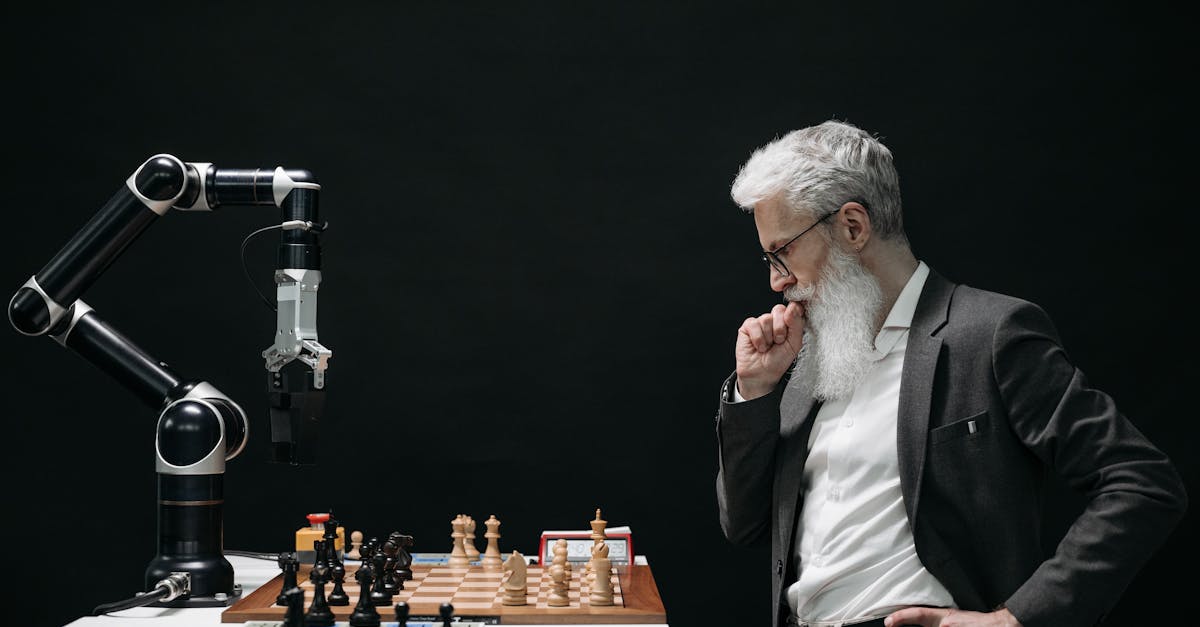
Artificial intelligence researchers are now adopting a dual stance: that of explorer and curator. Methodological rigor, experimental validation, and reproducibility protocols remain central, but they coexist with a whole generation of tools to accelerate progress, such as GPT language models, BAI (Baidu AI), and Amazon Web Services AI cloud platforms. For example, OpenAI not only publishes its results, it also makes its models available for open research, allowing the academic community to test, validate, and adapt these AIs to specific problems. This blend of traditional methods and innovative approaches builds credibility while boosting the speed of innovation.
https://www.youtube.com/watch?v=boYFIB43VxU
Vous avez un projet spécifique ?
Kevin Grillot accompagne entrepreneurs et PME en SEO, webmarketing et stratégie digitale. Bénéficiez d'un audit ou d'un accompagnement sur-mesure.
In 2025, a handful of giants will hold the majority of the market share. OpenAI, with its GPT models, remains in the lead, but Google DeepMind, Meta AI, Apple Siri, IBM Watson, NVIDIA AI, as well as Baidu AI and Anthropic, are now playing a crucial role in this competition. Investments are keeping pace, with several billion dollars injected each year for research, development, and staff upskilling. Domination is not only technological; it is also political, as highlighted this year by the intensification of American ambitions to maintain its hegemony. Donald Trump’s recent declaration to accelerate all aspects of AI demonstrates this firm desire to strengthen the American position in the face of increased competition from China, particularly with Baidu AI, which is enjoying rapid growth. To understand who is really calling the shots, it is necessary to closely monitor these players and their strategic alliances.
Discover artificial intelligence: definition, applications, challenges, and innovations. Explore how AI is transforming society, businesses, and our daily lives.

An ideological, strategic, and economic race. Mastering AI is becoming a lever of power. Since 2023, driven by policies such as those of Biden and Trump, the United States has been seeking to establish a technological monopoly. China is also accelerating with Baidu AI, while the EU, through regulations such as the AI Act, is attempting to structure a robust European ecosystem. Competition is intensifying, with risks of fragmentation or standards wars, but also opportunities for collaboration in research and development. Mastery of these tools determines the ability to define scientific research, the economy, and even national security. Domination is at stake, with the ultimate challenge being the ability to define the global standard. More information on Trump’s plan
Ethical challenges and responsible AI research The race for AI is not limited to power and speed. Responsibility, ethics, and regulation are becoming priorities. Traditional research emphasizes algorithm transparency, bias management, application security, and privacy protection. The rise of generative AI, particularly with models like GPT-4 or Gemini, raises major questions about disinformation, manipulation, and even digital sovereignty. The scientific community, in collaboration with governments, is working to develop strict regulations, as highlighted this year by the EU AI Act. The necessary transparency in design, model explainability, and bias mitigation are becoming increasingly important as civil society demands credible and verifiable answers. The Challenges of Global AI Regulation

Detailed study on regulation
Frequently asked questions (FAQ) on AI adoption and traditional research in 2025
How is AI influencing the US job market?
The rise of AI is creating new opportunities, particularly in robotics, cybersecurity, and research, but also challenges related to automation and the retraining of traditional jobs.
Do major players like OpenAI or Google DeepMind still respect traditional research?

Absolutely. The majority of projects integrating AI are based on solid scientific approaches, with rigorous validation and experimental validation.
- What is the impact of regulation on innovation? Regulations, currently being developed, seek to balance rapid growth while ensuring responsible and ethical research.
- Can French startups capitalize on this momentum? Yes, with a booming ecosystem, particularly thanks to record investments in AI, they can collaborate with global players to accelerate their development.
- How is traditional research adapting to the era of generative AI? By adopting rigorous protocols, validating each step, and integrating technological advances within a strict scientific framework.
📋 Checklist SEO gratuite — 50 points à vérifier
Téléchargez ma checklist SEO complète : technique, contenu, netlinking. Le même outil que j'utilise pour mes clients.
Télécharger la checklistBesoin de visibilité pour votre activité ?
Je suis Kevin Grillot, consultant SEO freelance certifié. J'accompagne les TPE et PME en référencement naturel, Google Ads, Meta Ads et création de site internet.

Checklist SEO Local gratuite — 15 points à vérifier
Téléchargez notre checklist et vérifiez si votre site est optimisé pour Google.
- 15 points essentiels pour le SEO local
- Format actionnable et imprimable
- Utilisé par +200 entrepreneurs


