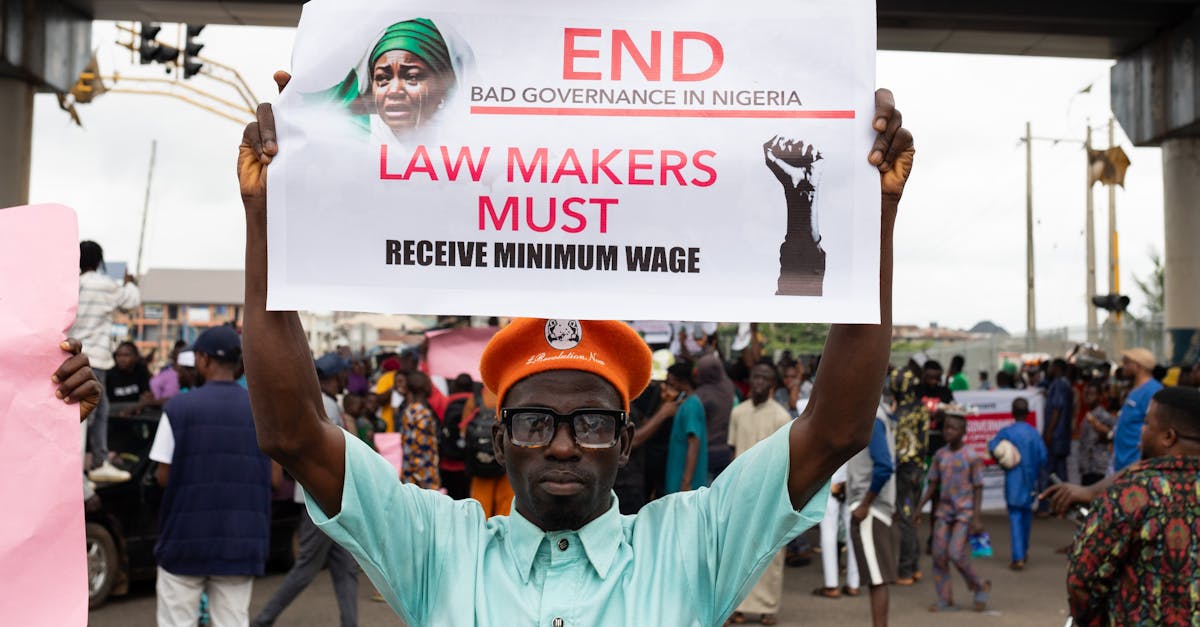
- Current Amount and Indexation Mechanisms of the SMIC in Belgium
- Comparison of the Belgian Minimum Wage with Other European Countries
- Impact of the SMIC on the Purchasing Power of Belgian Workers
- Influence of Social and Economic Policies on the Belgian SMIC
- Labor Law and Rights Relating to the SMIC in Belgium
- Prospects for Development and Proposals for Reforming the Minimum Wage
- Economic and Social Consequences of a High SMIC
- Best Practices for Employers and Employees Regarding Minimum Compensation
- FAQ: Answers to Frequently Asked Questions about the Belgian SMIC 2025
Current Amount and Indexation Mechanisms of the SMIC in Belgium
The minimum wage in Belgium plays a crucial role in workers’ compensation and the stability of the Belgian economy. Since April 2024, the SMIC has been set at €2,029.88 gross per month for a full-time worker, demonstrating a clear desire to guarantee a substantial minimum income while preserving working conditions. This amount represents a significant increase of €35.70 compared to the previous year, an increase that is part of a rigorous indexation mechanism. This involves automatically adjusting wages to inflation, while excluding certain products deemed too volatile, such as fuel, alcohol, and tobacco. This method aims to secure employees’ purchasing power without creating an excessive inflationary spiral. The implementation of this indexation system remains a major challenge, a real administrative headache that nevertheless helps prevent the minimum wage from becoming disconnected from economic reality. In concrete terms, as soon as the consumer price index exceeds a certain threshold, an increase in the minimum wage is automatically considered. A second increase of the same magnitude, an additional €35.70, is also planned for 2026. This forecast offers an encouraging outlook, but it must be closely monitored to prevent statutory increases from slowing hiring or weighing too heavily on the competitiveness of Belgian companies. 📈 Increase of €35.70 in April 2024
💶 Second revaluation planned for 2026
⚖️ Automatic indexation according to inflation excluding fuel, alcohol, and tobacco
⚠️ Risk of insufficient adjustment in the event of high inflation
- 📊 Direct impact on the statutory minimum wage to preserve purchasing power
- Year
- Gross Monthly Minimum Wage Amount (€) 🔥
- Variation (%) 📊
- 2023
| 1,994.18 | +2.0% | 2024 |
|---|---|---|
| 2,029.88 | +1.8% | 2026 (planned) |
| 2,065.58 | +1.8% | For a more comprehensive analysis of current terms and updated data, consult reliable sources such as |
| this detailed guide on the Belgian minimum wage | or the | FSI blog dedicated to the minimum wage |
. Discover everything you need to know about the minimum wage: definitions, economic issues, and variations by country. Learn about its impact on the lives of workers and businesses. Comparison of the Belgian minimum wage with other European countries The Belgian minimum wage occupies a notable place in the European ranking, ranking, in 2024, the fifth EU countryto offer a minimum wage above €2,000 gross per month. Here’s a detailed snapshot revealing the significant disparities this position presents within the Union:


Gross Monthly Minimum Wage (€) 💰
EU Position 🏆 Luxembourg 2,570.93
| 1st | Ireland | 2,146.30 |
|---|---|---|
| 2nd | Netherlands | 2,134.08 |
| 3rd | Germany | 2,054 |
| 4th | Belgium | 2,070.48 |
| 5th | France | 1,766.92 |
| 6th | This hierarchy highlights a real gap between Belgium and some of its neighbors, particularly France, where the minimum wage is more than €300 lower. This margin benefits the remuneration of Belgian workers but also poses challenges in terms of economic competitiveness and social balance. | 🇧🇪 Position in the European top 5 for the minimum wage |
| 🔍 Significant gaps with countries with low minimum wages, such as Bulgaria (€477) | ⚖️ Impact on the mobility and international attractiveness of workers | ✈️ Influence on professional migration flows within the EU |
🕵️♂️ Increased pressure on Belgian companies in a globalized environment
- To explore Belgium’s position in this context, sources such as
- Europe Voyage on the Belgian minimum wage
- or
- Work in Belgium
- offer in-depth analysis of the Belgian economy and its place in the European market. https://www.youtube.com/watch?v=yjGLgyxFM0E
Impact of the SMIC on the Purchasing Power of Belgian Workers A regular increase in the SMIC is a dual weapon: it protects workers by increasing their guaranteed minimum wage, but it also weighs on the economy through a possible inflationary effect. In Belgium, indexation plays a key role in offsetting price increases, particularly during sustained inflationary peaks. In the first quarter of 2023, the cumulative wage increase reached nearly 10%, significantly exceeding the comparative trend in France. However, over a longer time horizon, the growth in Belgian purchasing power remains more moderate: +7% between 2000 and 2022, compared to +20% for France. This paradoxical situation is largely explained by differences in adjustment mechanisms, particularly the specific functioning of the Belgian SMIC linked to its indexed formula. This delicate balance must be maintained to avoid: 🔺 Galloping inflation which would hamper working conditions

⚠️ An increase in employer contributions slowing down hiring
💡 An urgent need for solutions to improve remuneration without deteriorating employment
For example, the comparison with Portugal reveals how each country adapts its salary policies according to its economic constraints, thus highlighting the localized and complex nature of the issues related to the minimum wage. Several detailed analyzes can be found on Ptitclic.netor even
Digit-Finance
- .
- discover everything you need to know about the minimum wage: its role in the economy, its impact on the labor market, and the issues associated with its increase. find out about the laws in force and the current debates concerning the minimum wage in France.
- Influence of social and economic policies on the Belgian SMIC
- The minimum wage is not content to be a simple remuneration tool: it is a political and social lever which reflects the compromises between protection of workers and preservation of the national economy. In Belgium, this dynamic is exacerbated by the debates that animate the political and economic sphere.
The Belgian Socialist Party, for example, proposes raising the minimum wage to 2,800 euros gross per month, which would be a major development, but which also raises questions about: 🛑 The impact on business competitiveness 📉 The ability of SMEs to absorb higher salary costs ⚖️ Risks of deterioration in employment, especially in already fragile sectors🌍 Consistency with the salary policies of neighboring countries

Vous avez un projet spécifique ?
Kevin Grillot accompagne entrepreneurs et PME en SEO, webmarketing et stratégie digitale. Bénéficiez d'un audit ou d'un accompagnement sur-mesure.
Furthermore, the Belgian economy remains highly sensitive to international fluctuations, particularly with its integration into the EU, which requires constant monitoring of wage trends. To understand these economic and social issues, visit
Galius.fr
or
- Creation-Entreprise-France.com
- .
- Legislation and labor rights relating to the minimum wage in Belgium
- The Belgian minimum wage is governed by specific regulations integrated into national labor law. This legislation aims to ensure a fair framework for workers while defining the responsibilities of employers. More than just an amount, the minimum wage is also a pivotal element of the compensation system and legal working conditions. Collective labor agreements (CLAs), particularly CLA No. 43, which governs minimum wage conditions, introduce strict rules regarding the scraping/lart-de-la-data-a-votre-portee-comment-le-web-scraping-peut-transformer-votre-entreprise/">application of these minimum wages. Age, for example, influences minimum wage amounts, with a clear distinction for young workers aged 18 and over.
Here are the highlights of labor law relating to the minimum wage:
📋 Obligation to apply the minimum wage for all jobs covered by the CLA ⚖️ Compliance with indexation and automatic revaluation 👥 Specific provisions for part-time or temporary jobs 🕰️ Regulations on overtime and premiums🔍 Increased oversight by labor inspectorates

In this context, the employer is required to provide compliant compensation, under penalty of sanctions. Monitoring compliance with the minimum wage is therefore part of a social protection and fairness approach. For more information on these aspects, see
FSI Blog
or
Oulala.net
- .
- Element of labor law ⚖️
- Description 📘
- scraping/lart-de-la-data-a-votre-portee-comment-le-web-scraping-peut-transformer-votre-entreprise/">Application of the minimum wage
- Legal obligation for any contract complying with the collective labor agreement
Indexation Salary updating based on inflation, excluding specific products Age distinction Differentiated minimum wage for workers aged 18 and overMonitoring
| Regular inspections to verify compliance with the minimum wage | Prospects for development and proposals for reforming the minimum wage |
|---|---|
| The trajectory of the minimum wage in Belgium is subject to lively debates and proposals with significant implications. The demand for a minimum wage of €2,800 gross per month, supported in particular by certain political figures, reflects a desire to address social issues related to poverty and precariousness, but this change also disrupts established balances. | This drastic increase raises questions about the economic consequences, particularly in terms of: |
| 📉 Risk of job losses, particularly in low-margin sectors | 🏭 Increased production costs and impact on competitiveness |
| 🛡️ Need to strengthen parallel social protections | 🤝 Potential triggering of negotiations within collective agreements |
| 📈 Possible impact on the efficiency of the Belgian labor market | The authorities therefore remain faced with a major challenge: how to balance fair compensation for workers with the country’s economic health? Observers also suggest consolidating targeted support measures rather than simply increasing the minimum wage, in order to ensure fair pay without compromising employment. Proposal 💡 |

Advantages 👍
Disadvantages 👎
Increase to €2,800 gross
- ✅ Poverty reduction, better pay
- ❌ Risk of exclusion of SMEs, increase in unemployment
- Maintained with indexation
- ✅ Economic stability, adaptation to prices
- ❌ Limited purchasing power in the long term
Targeted assistance for low incomes
| ✅ Greater social justice without a direct impact on wages | ❌ Increased administrative complexity | For more information, several detailed articles, such as those on |
|---|---|---|
| Infos-Entreprises | or | Ptitclic |
| are available and rich in up-to-date analyses. | Economic and social consequences of a high minimum wage | A high minimum wage cannot be considered independently of the reactions it provokes in the economy. While it ensures decent compensation for workers, it also impacts costs for businesses and, in turn, overall working conditions. The main impacts are evident in: |
| 📊 Job structure: greater job insecurity or reduced part-time work | 🏢 SME strategies in the face of rising wage costs | 🌐 Competitiveness at the European level, particularly in the EU context |
⚖️ Changes in collective bargaining agreements and social agreements 💬 Strengthened social dialogue between unions and employers For example, some Belgian companies have had to invest in automation or review their organizational methods to limit the financial impact of minimum wage increases. In this context, social negotiations are becoming more tense, and transparency in compensation management is more than ever a good practice to promote. The challenges are therefore multiple, between maintaining a good standard of living for employees and the economic viability of companies. A reading of Galius
Vous avez un projet spécifique ?
Kevin Grillot accompagne entrepreneurs et PME en SEO, webmarketing et stratégie digitale. Bénéficiez d'un audit ou d'un accompagnement sur-mesure.
and
Creation-Entreprise-France
provides essential benchmarks for understanding these complex interactions. https://www.youtube.com/watch?v=x2kwLjRp_A8
- Best Practices for Employers and Employees Regarding Minimum Wage
- Knowledge of and compliance with the Belgian minimum wage are essential for secure employment relationships. Employers and employees must be vigilant in the following areas to avoid disputes:
- ✔️ Regularly verifying salary adjustments to indexation
- ✔️ Compliance with collective bargaining agreements and age-specific scales
- ✔️ Proactive management of overtime and related bonuses
✔️ Transparent information on working conditions and compensation
✔️ Use of reliable tools for calculating salaries and benefits Failure to comply with these rules can result in sanctions, including salary adjustments and penalties. Hence the importance of appropriate training and support for employers to secure their human resources management. Online resources such as Travail-en-Belgique.net and MobileCube

Advice 📌
Expected impact ⚡
- Strict compliance with indexations
- Avoids disputes, guarantees purchasing power
- Personalized contract monitoring
- Improves employer-employee relations
- Continuing HR training
Optimizes salary and entitlement management
FAQ about the minimum wage in Belgium ❓ What is the current minimum wage in Belgium? The minimum wage has been set at €2,029.88 gross per month since April 2024. ❓
| How is the minimum wage indexation calculated? | It is based on inflation excluding certain products such as fuel, which is automatically applied above a threshold. |
|---|---|
| ❓ | Is the Belgian minimum wage higher than that of France? Yes, the Belgian minimum wage will be approximately €303 higher per month than the French minimum wage in 2024. |
| ❓ | What are the consequences of increasing the minimum wage too quickly? |
| A significant increase can weigh on the competitiveness of businesses and threaten employment, particularly in SMEs. | ❓ |

What recourse is available in the event of non-payment of the minimum wage?
- Employees can contact the labor inspectorate, which verifies compliance with labor law and imposes sanctions in the event of non-compliance. For comprehensive and up-to-date information, exploring specialized and reliable websites such as
FSI-blog - or Ptitclic.net
will be a good idea for any worker or employer. - https://www.youtube.com/watch?v=_SdVsSlyxM8 Discover everything about the minimum wage: definition, issues, variations by country, and its impact on the economy and standard of living. Learn about the current debates concerning minimum wage increases and their effect on workers.
-
-

📋 Checklist SEO gratuite — 50 points à vérifier
Téléchargez ma checklist SEO complète : technique, contenu, netlinking. Le même outil que j'utilise pour mes clients.
Télécharger la checklistBesoin de visibilité pour votre activité ?
Je suis Kevin Grillot, consultant SEO freelance certifié. J'accompagne les TPE et PME en référencement naturel, Google Ads, Meta Ads et création de site internet.

Checklist SEO Local gratuite — 15 points à vérifier
Téléchargez notre checklist et vérifiez si votre site est optimisé pour Google.
- 15 points essentiels pour le SEO local
- Format actionnable et imprimable
- Utilisé par +200 entrepreneurs